Review: I bought an Amazon Echo dot to listen to audio books via Audible for my father with alzheimer's disease and partially blind.
Listening to Audio books on Audible via an iPad was becoming more and more difficult so after a recommendation by AI, I decided to invest in an Echo Dot.
Introduction
When my father's health began to decline, his world shrank along with it. Unable to read comfortably due to partial blindness and struggling with the cognitive challenges of Alzheimer's, his options for entertainment and engagement seemed to be disappearing. Then I discovered the Amazon Echo Dot, a small device that would become an unexpected lifeline, reconnecting him to the books and stories he loves.
The backstory: losing independence with technology
My father, born in 1940, has always been fascinated by World War II history. Before his illness progressed, he relied on Calibre, a library subscription app that worked reasonably well on his iPad. While affordable, it tied him to a single device, and as his condition worsened, that device became a source of frustration rather than comfort.
The iPad was supposed to be helpful. It wasn't. Forgotten passwords, app crashes, closed applications, and the growing confusion of navigating digital interfaces meant that what should have been simple (opening an audiobook) became an ordeal that left him panicked and defeated. Authentication codes, app updates, and subscription management were complexity he simply couldn't manage anymore.
Audiobooks and audio devices became his primary lifeline. If technology could be made simpler, it might work. But the iPad had proven that complexity was the enemy.
How I found the Amazon Echo Dot
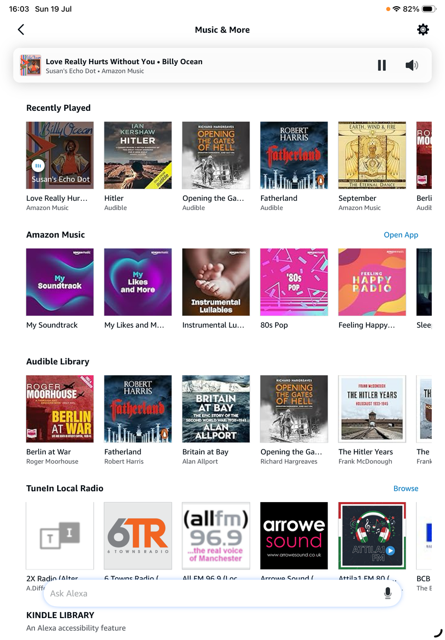
I turned to AI for advice, asking for a solution tailored to someone with Alzheimer's who struggles with sight. The recommendation came back clear: an Amazon Echo Dot, linked to Audible.
The promise was elegant: no screens to navigate, no passwords to remember, no app management. Just voice.
Arrival and first impressions
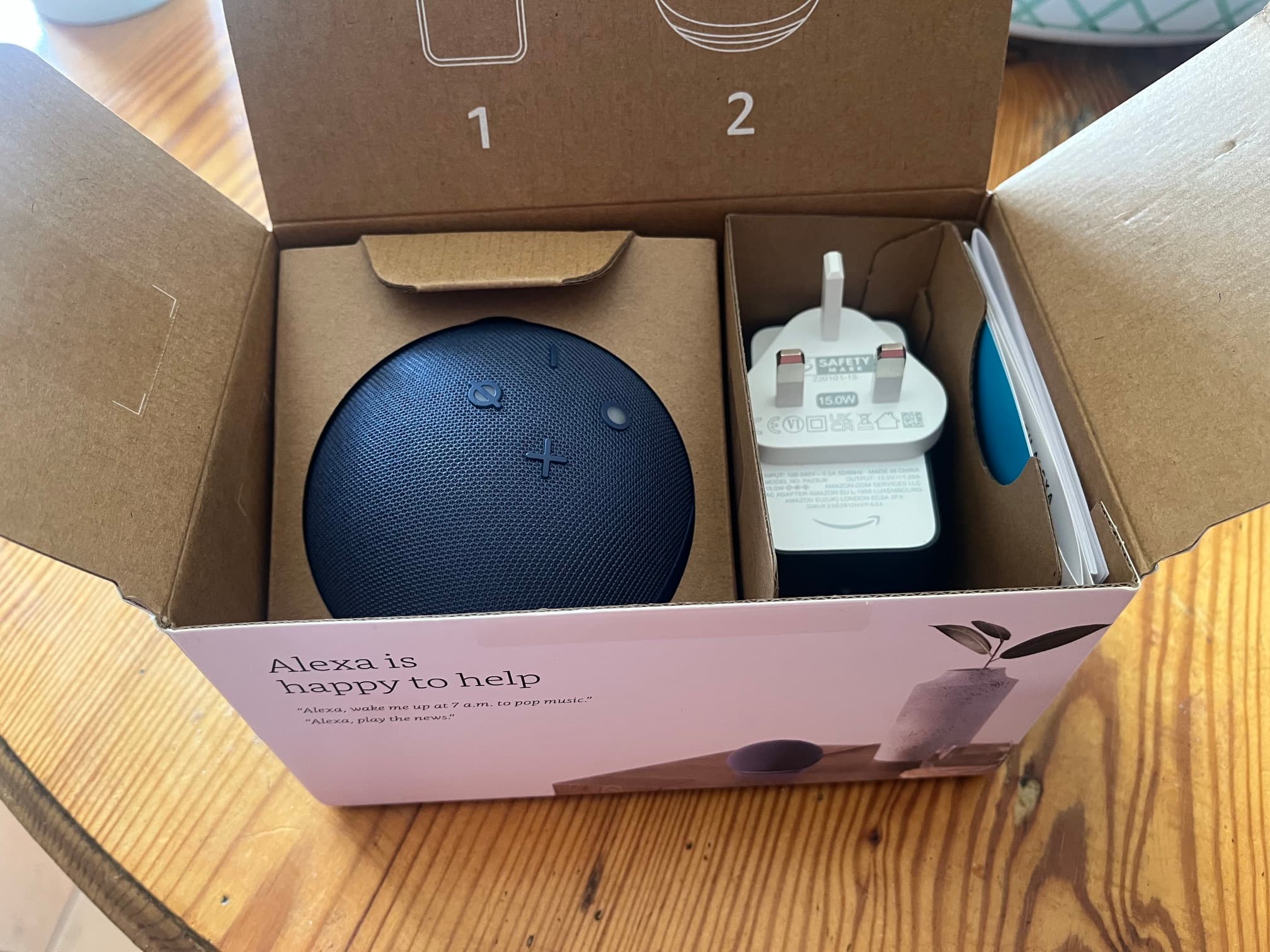
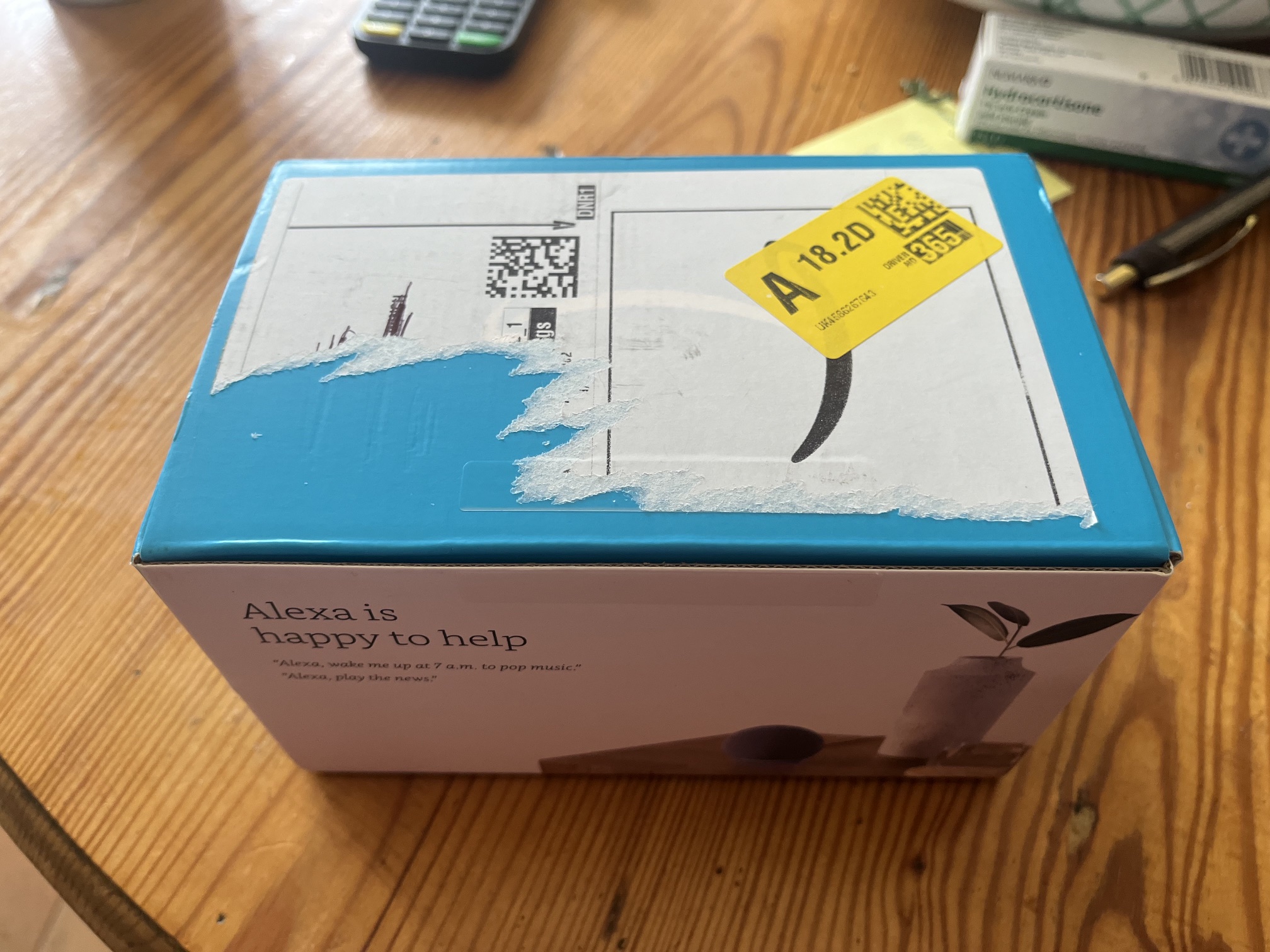
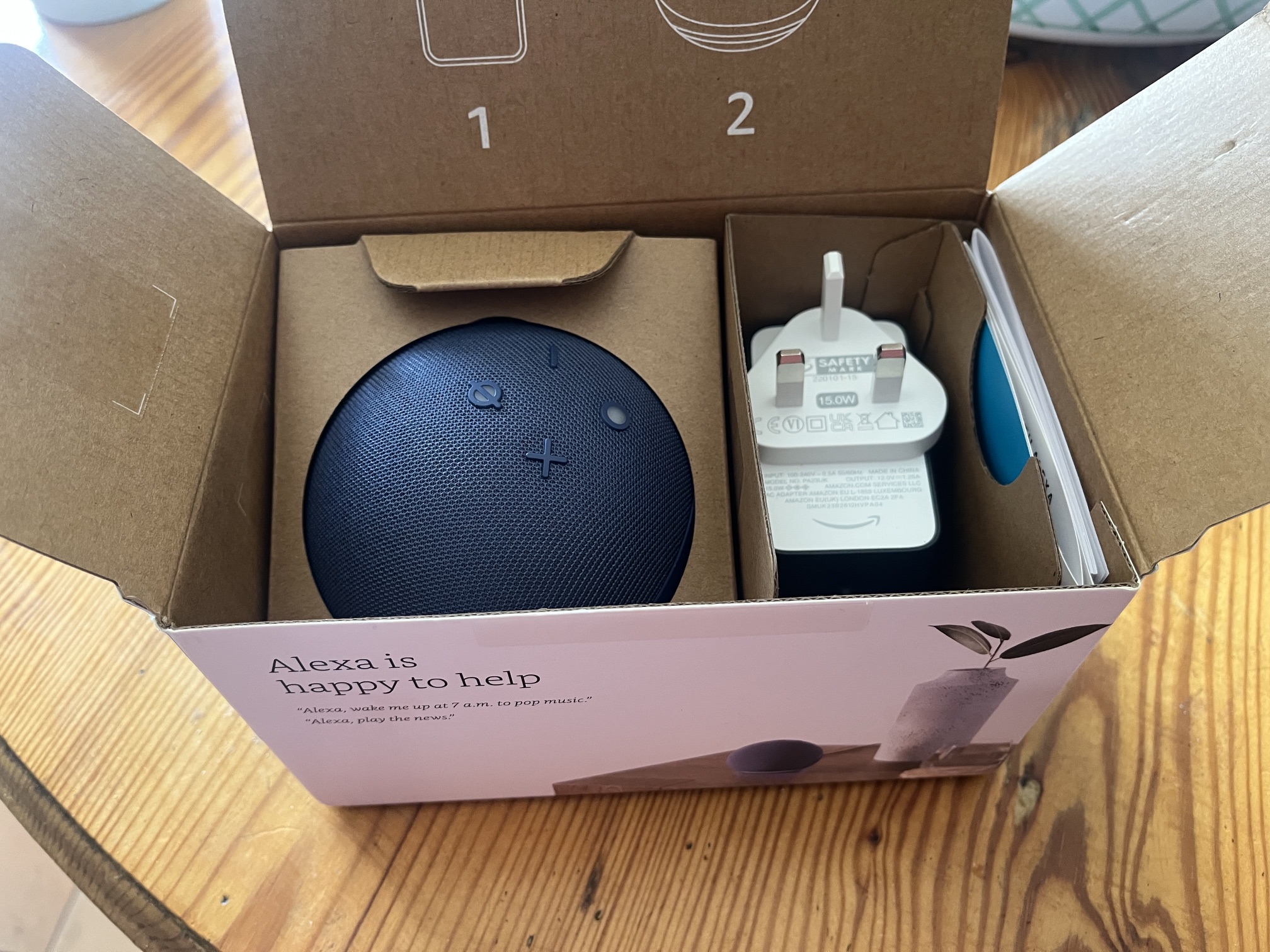
The Echo Dot arrived within two days, earlier than expected. Unboxing it revealed something smaller than I'd anticipated—which turned out to be a positive. It's an unobtrusive device that fits naturally into any room without dominating the space.
Setup: simple, but interrupted by upselling
The setup process itself is straightforward enough. Log into an Amazon account on any connected device, install the Alexa app, and within moments it locates the Echo Dot via WiFi or Bluetooth.
For someone technically inclined, this is painless. For my father, of course, I handled it.
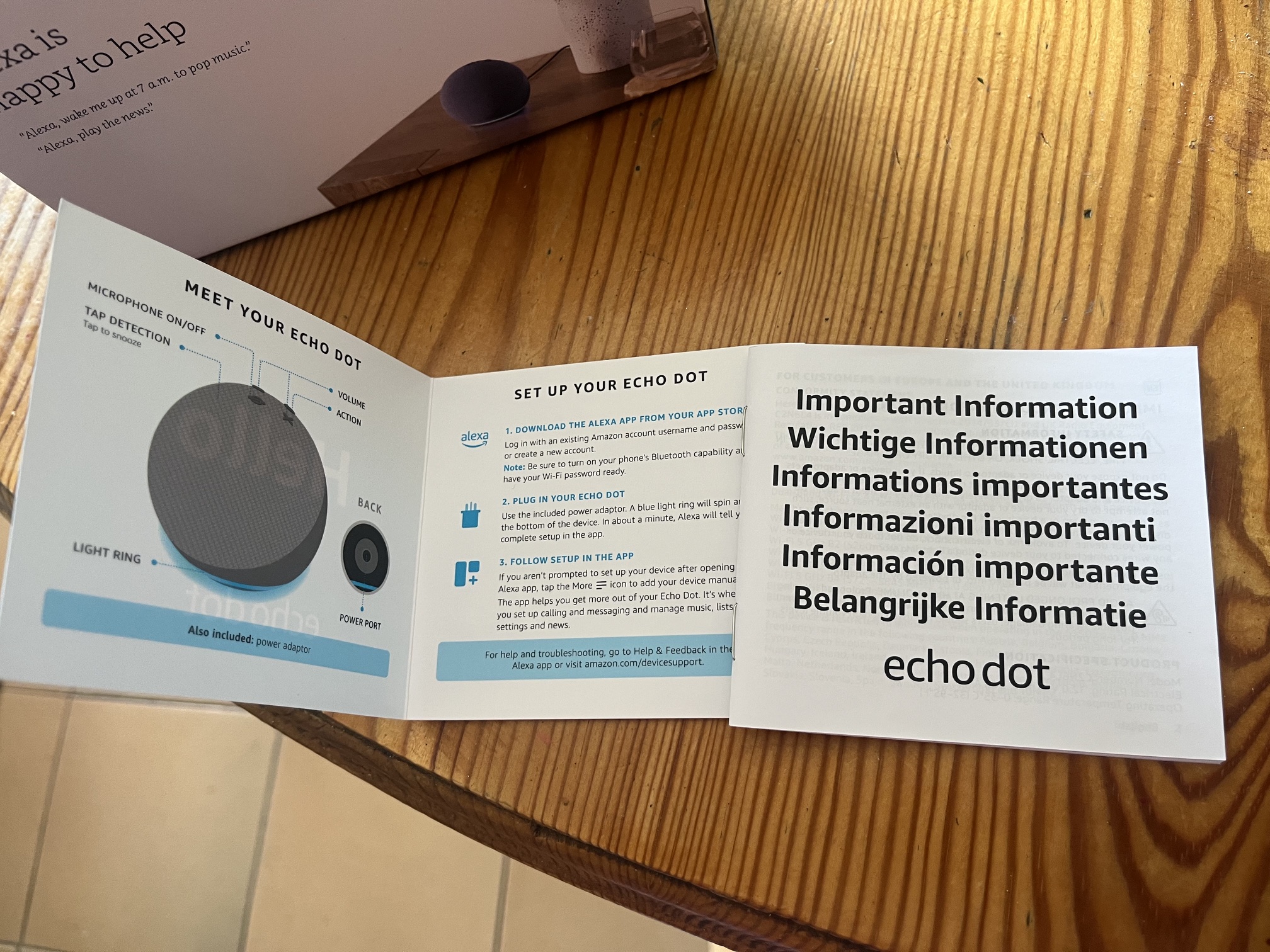
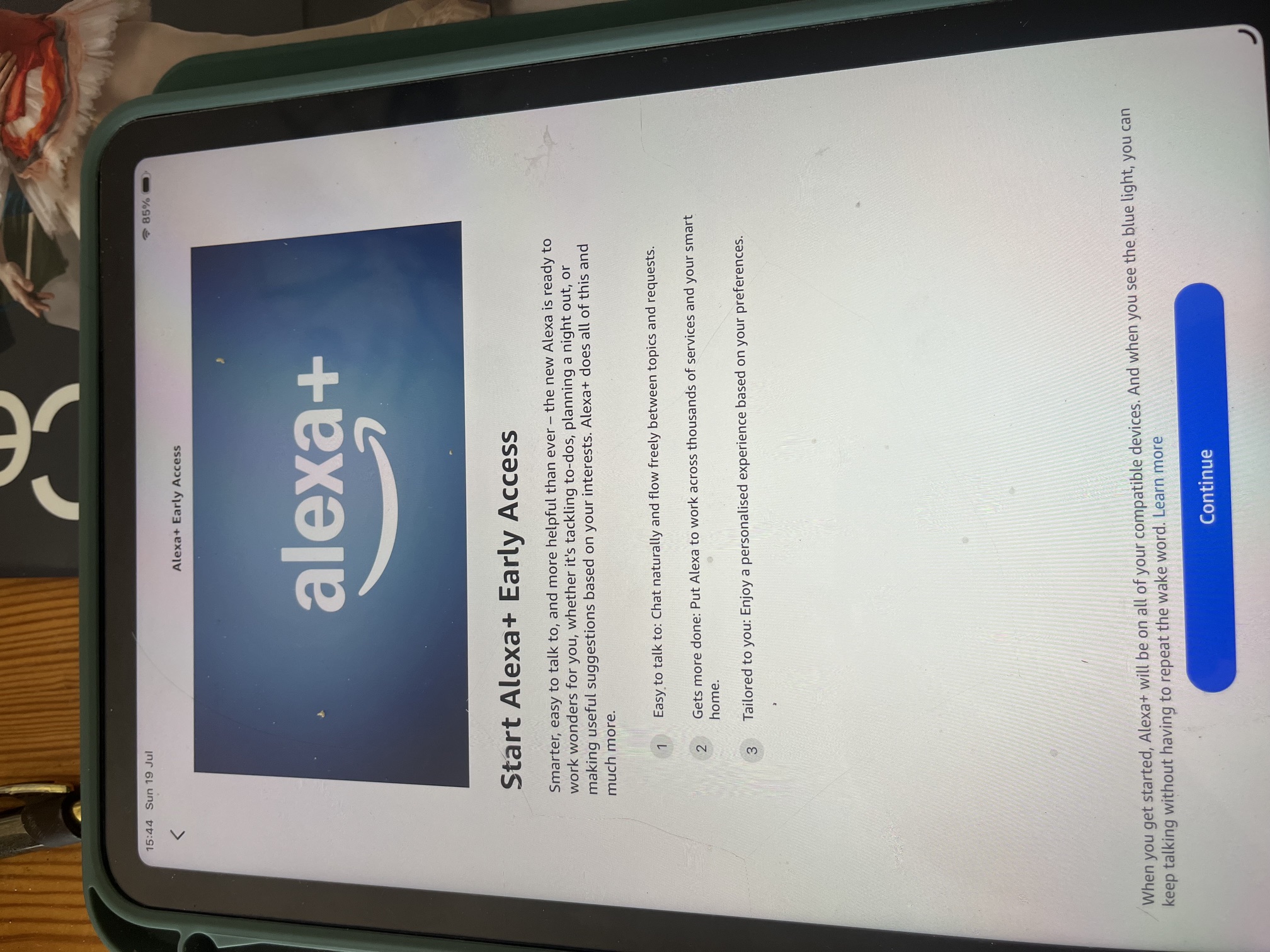
Where setup becomes irritating is Amazon's relentless push for upgrades. The Alexa app constantly nudges you toward Alexa+ subscriptions. The prompts and suggestions just don't stop. It's the same aggressive upselling Amazon applies everywhere else, they simply want you to keep paying. I found myself wondering if I had to subscribe to use Audible, which triggered genuine concern. Thankfully, the accounts were already linked once I got past the noise.
The device's power solution is genuinely excellent: it plugs directly into mains power with no charging required. For my father, who struggled to manage iPad charging and battery anxiety, this is a major advantage. It stays in one place, permanently ready. The trade-off is location dependency (you can't move it around the house easily) but we're already considering purchasing a second device for other rooms. I'm curious whether they'd share settings and preferences.
The awkward problem: voice training
Amazon allows you to train Alexa to recognize specific voices by having the device prompt you to read out several sentences. This sounded perfect for my father's needs, Alexa could learn to respond to him specifically.
There's one significant problem: someone with Alzheimer's cannot reliably remember or read four sentences in sequence. In theory, a carer can help by reading the prompts aloud, but that defeats the purpose. When the carer speaks, Alexa trains on the carer's voice, not the patient's.
We decided not to pursue voice training. Fortunately, Alexa recognizes my father's voice well enough without it.
Voice commands: where the Echo Dot truly shines
This is where the Echo Dot transforms from a nice idea into genuinely life-changing technology.
My father simply says voice commands, and things happen. No app navigation. No passwords. No confusion.
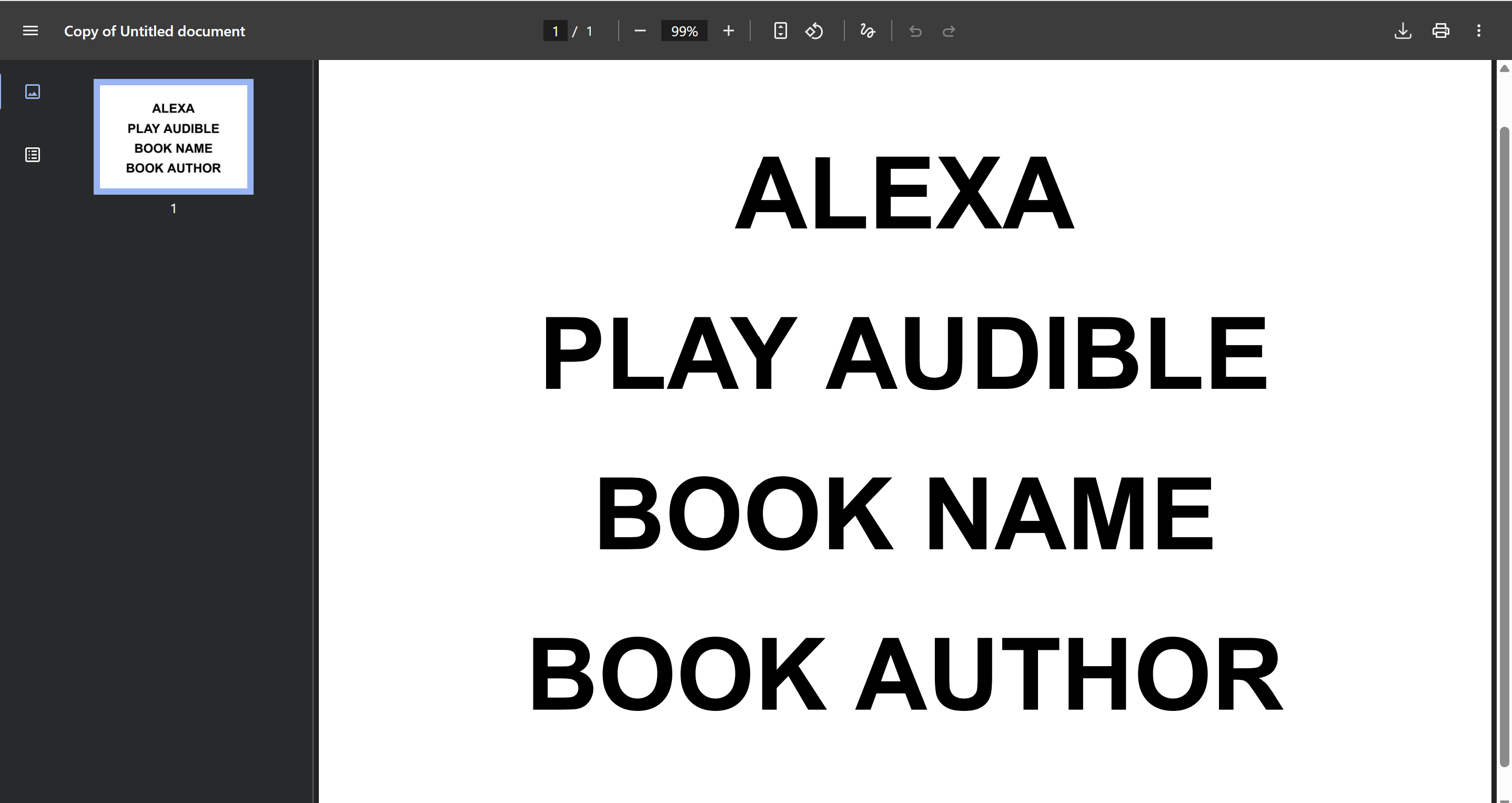
The beauty is in the specificity. To play an audiobook, you must be precise:
Alexa (wake word, required)
Play
Audible
Book name
By Author name
Less specific commands backfire (asking for something by partial name or vague description results in Alexa opening random music or unrelated content). But once you have the exact title, the syntax becomes muscle memory.
After the initial command, everything else flows effortlessly:
"Alexa, pause"
"Alexa, next chapter"
"Alexa, resume"
"Alexa, stop"
It's intuitive. It works consistently. And it requires nothing except his voice.
Creating a carer's guide
The specificity of voice commands, while powerful once learned, presented a challenge initially. To help my father remember the exact syntax and sequence, I created a simple reference guide printed on two pieces of A4 paper. These instructions live next to his Echo Dot, a physical cue he can reference when needed.
It works. He uses it. It reduces the frustration and panic that used to accompany trying to access audiobooks.

The verdict
The Amazon Echo Dot isn't perfect (the aggressive upselling is genuinely annoying, and voice training for people with cognitive decline needs to be rethought by Amazon). But these are minor irritations compared to what the device accomplishes.
For my father, it has restored access to the thing that still brings him joy: stories. WW2 histories, biographies, novels, they're all there, accessible through nothing more than his voice. No passwords. No complicated menus. No panic.
It's a simple device that works simply. In the context of advancing illness, that simplicity is everything.
If you're caring for someone with Alzheimer's or significant vision loss, and they still enjoy reading, the Echo Dot with Audible deserves serious consideration. It may just be the bridge between independence and complete dependence that gives both of you a little more peace.
Marcus has been reviewing consumer tech for over a decade. He's the person friends text when they need a phone, laptop or gadget recommendation — and he takes that responsibility seriously. See all their stories →